TelemetryOS Is Coming: A Screen Application Platform
Meet TelemetryOS—a screen application platform built for real applications, modern development, and real-world environments.
For years, digital signage has meant playlists and manual updates. TelemetryOS flips that model—treating every screen like an application endpoint you can build, deploy, and operate with confidence.

TelemetryOS Is Coming: A Screen Application Platform
Development teams attempting to turn screens into something beyond looping playlists consistently encounter the same limitations: fragile integrations that break during updates, interactivity constrained by proprietary content tools, inconsistent behavior across distributed devices, and deployment processes that feel more like rolling dice than shipping software. The moment requirements expand to include real-time data, peripheral device support, or safe fleet-wide updates, conventional digital signage platforms reveal a fundamental architectural mismatch. These systems were designed for content scheduling, not application deployment.
The questions organizations actually need answered differ from what traditional signage addresses. Rather than "How do I schedule content?" teams increasingly ask: How do screens run React applications that integrate with existing APIs? How do updates deploy across hundreds of devices with the confidence of a standard web release? How do screens connect to physical hardware—touch, sensors, scanners, printers—without custom engineering for each integration? These questions require treating screens as application platforms rather than content endpoints.
TelemetryOS addresses this gap by providing a platform specifically designed for deploying and operating screen applications at scale. The system combines purpose-built edge hardware (Node Pro), a hardened operating system and runtime (TelemetryOS Edge), and cloud orchestration infrastructure that handles fleet management with the operational rigor development teams expect. This approach starts with application deployment as the primary use case rather than incrementally improving content management.
What TelemetryOS Provides
TelemetryOS delivers infrastructure for teams needing screens to function like software: versioned, testable, deployable, and integrated with operational systems. The platform architecture addresses the full stack from secure edge devices through application runtime to cloud orchestration, covering device provisioning, secure updates, offline operation, fleet monitoring, policy enforcement, and lifecycle management.
Three integrated layers work together. Node Pro provides purpose-built edge hardware designed for commercial deployment with secure boot, hardened enclosures, and specifications appropriate for continuous operation. TelemetryOS Edge delivers the operating system and application runtime that keeps deployments stable even when network connectivity proves unreliable, caching content locally and degrading gracefully during outages. Cloud orchestration handles fleet-scale operations—deployment pipelines, policy management, monitoring infrastructure, and administrative tooling for managing networks from dozens to thousands of devices.
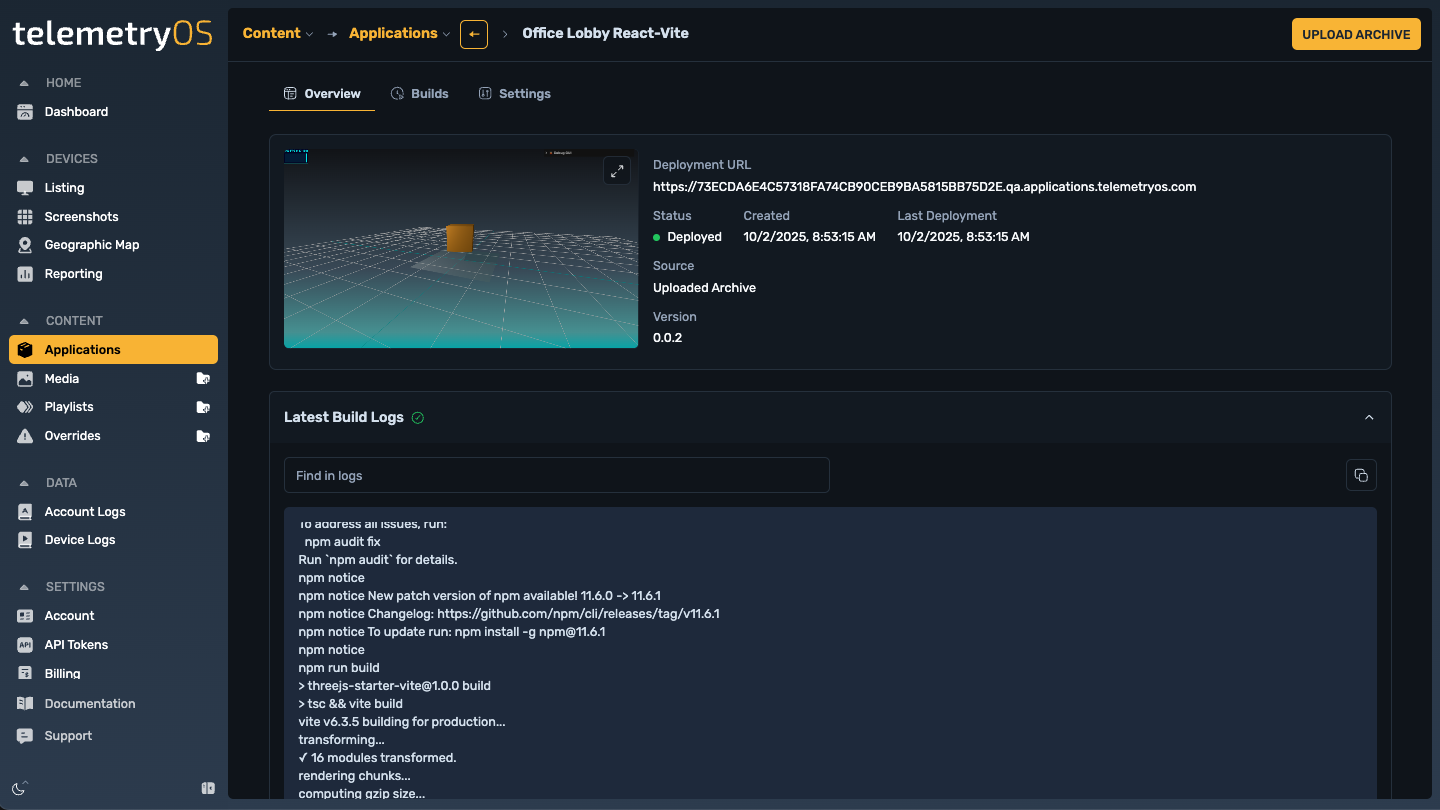
Developer-First Design
Most digital signage platforms were built for content teams, with developer needs addressed through afterthought APIs. TelemetryOS inverts this priority by starting with application development as the primary use case. Teams build screen experiences using web technologies (React, JavaScript, standard APIs) rather than learning proprietary content authoring tools. Deployment patterns follow established practices from web application operations rather than media publishing workflows.
Consider a typical workflow: a team pushes changes to their repository, a CI pipeline builds and tests the application, and the update propagates to a staging fleet within minutes for validation. Once approved, the same deployment mechanism rolls changes to production devices with automatic rollback if health checks fail. This mirrors how teams already ship web applications—no special training, no proprietary tooling, no manual device-by-device updates.
Developers work in familiar technology stacks using skills they already possess and deployment pipelines they already operate. Operations teams gain consistency across fleet deployments, policy-based management, and monitoring infrastructure that provides visibility into application health rather than just confirming that content files played.
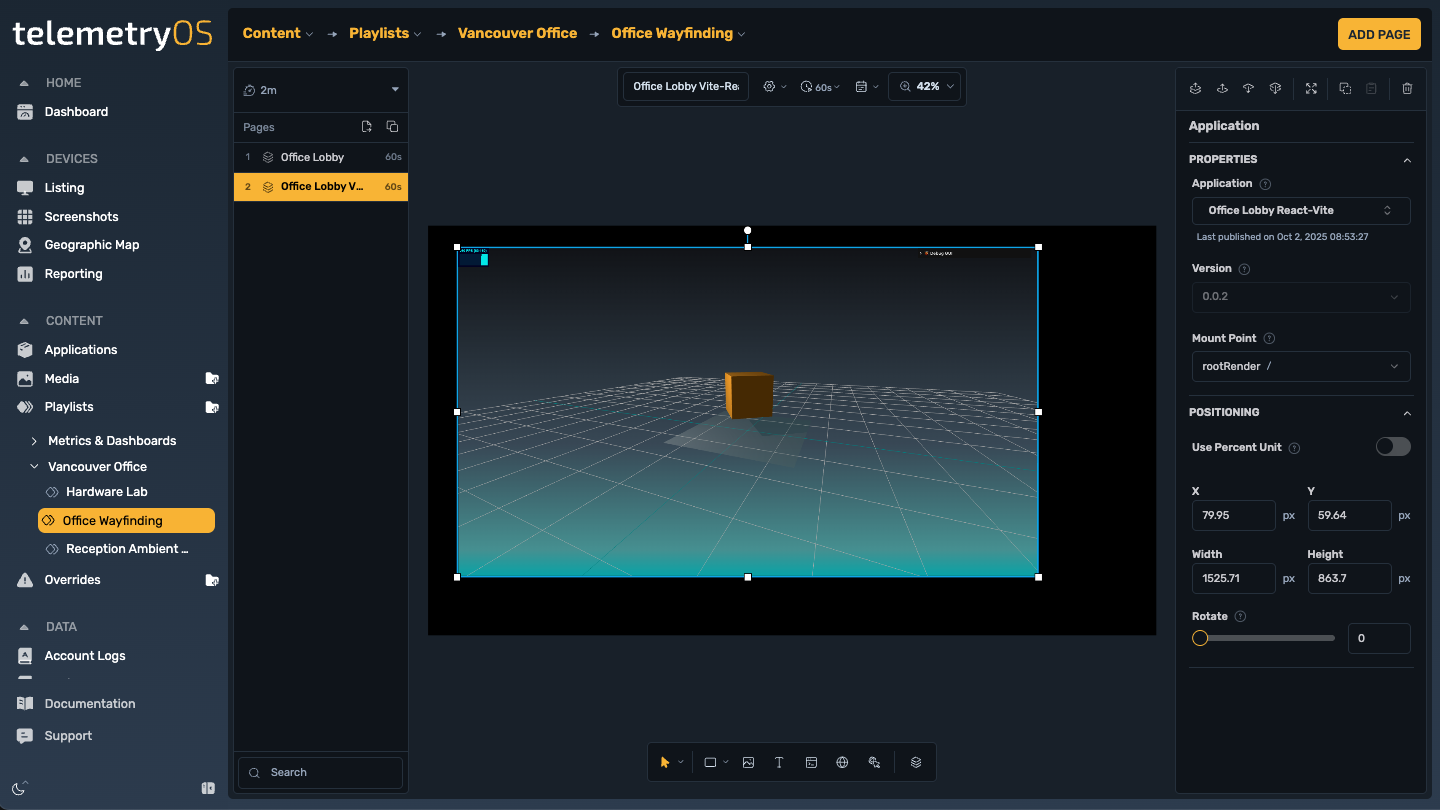
Built for Real-World Deployment
Screens operate in commercial environments that differ dramatically from development labs: retail stores, manufacturing facilities, restaurants, healthcare clinics, public spaces. Networks prove unreliable, devices experience power cycling, environmental conditions vary, and peripheral hardware integration becomes critical.
Hardened device foundations provide physical and logical security appropriate for devices operating in accessible locations. Offline-friendly behavior ensures applications continue functioning during connectivity gaps. Rich I/O and peripheral support lets applications connect to the physical environment (touch screens, sensors, scanners, printers, serial devices) without requiring custom engineering for each integration.
When TelemetryOS Is Not the Right Fit
Every platform involves tradeoffs, and TelemetryOS is no exception. Organizations should understand where this approach may not align with their needs.
Simple content-only deployments. If the requirement is purely static content loops—promotional videos on a single lobby screen, a menu board that changes twice daily—TelemetryOS provides capabilities that may exceed what the use case demands. Traditional digital signage CMS platforms handle content scheduling effectively for these scenarios.
Teams without development resources. TelemetryOS treats screens as application endpoints, which means someone needs to build or customize those applications. Organizations lacking development capacity or budget for custom work may find the platform requires more technical involvement than they can sustain. The low-code tools reduce this barrier, but application-centric deployments still differ fundamentally from drag-and-drop content scheduling.
Existing infrastructure investments. Organizations with significant investments in existing signage infrastructure—hardware, training, workflows—face real switching costs. The benefits of application-centric deployment must justify migration effort and operational change.
Highly regulated custom hardware requirements. While TelemetryOS supports bring-your-own-device deployments, the platform is optimized for Node Pro hardware. Custom hardware implementations require consultation and may not deliver the same seamless experience as purpose-built devices.
Who This Is For
TelemetryOS addresses the needs of teams outgrowing traditional signage platforms, particularly when "make a change" has become a lengthy ticket backlog or when simple requests cascade into brittle integrations. Development teams build screen applications using familiar web technologies and ship improvements through established deployment pipelines. Operations and business teams gain standardized deployments across locations, eliminating the "works at headquarters but fails in the field" problems that plague legacy implementations.
Early Access
Early access programs are opening as TelemetryOS builds toward general availability in March. Organizations wanting to evaluate the platform and potentially influence development should join the early access list at coming-soon. Teams ready for deeper discussions can schedule demos at demo.
What happens when screens become genuine application endpoints—versioned, tested, deployed like any other software artifact? The boundaries between digital products and physical spaces start to blur. That shift may matter more for how organizations think about their spaces than for how they think about their screens.
See TelemetryOS in Action
Explore how leading companies transform their screens